Despite increased public spending on health, fragmented public financial management (PFM) systems continue to limit the effective and efficient use of resources for primary health care services in Indonesia.
Under Law No. 17 of 2023 on Health and Minister of Health Regulation No. 19 of 2024, Indonesia is implementing major reforms to strengthen primary health care. However, financing remains spread across multiple funding sources with different allocation, disbursement and reporting rules. These challenges affect budget execution, reduce flexibility at facility level and limit the ability of primary health care facilities (puskesmas) to respond effectively to service delivery needs.
To support ongoing reforms, World Health Organization (WHO), together with national authorities and academic partners, conducted an in-depth review of PFM bottlenecks. The findings and policy insights were synthesized into a policy brief aimed at informing decision-makers across national and subnational levels.
The policy brief identifies key challenges across the budget cycle, including fragmented financing flows, inconsistent costing and allocation rules, delayed disbursement, limited flexibility in fund use, and weak integration between financial and service delivery data which led to underutilization of available resources and uneven performance across puskesmas. To address these issues, the brief recommends strengthening integrated budgeting, improving predictability and timeliness of fund disbursement, enhancing flexibility in fund utilization, and strengthening facility-level financial and performance reporting. It also highlights the role of public service agencies or badan layanan umum daerah (BLUD) status, which provides greater autonomy and flexibility for puskesmas and is associated with more efficient use of resources.
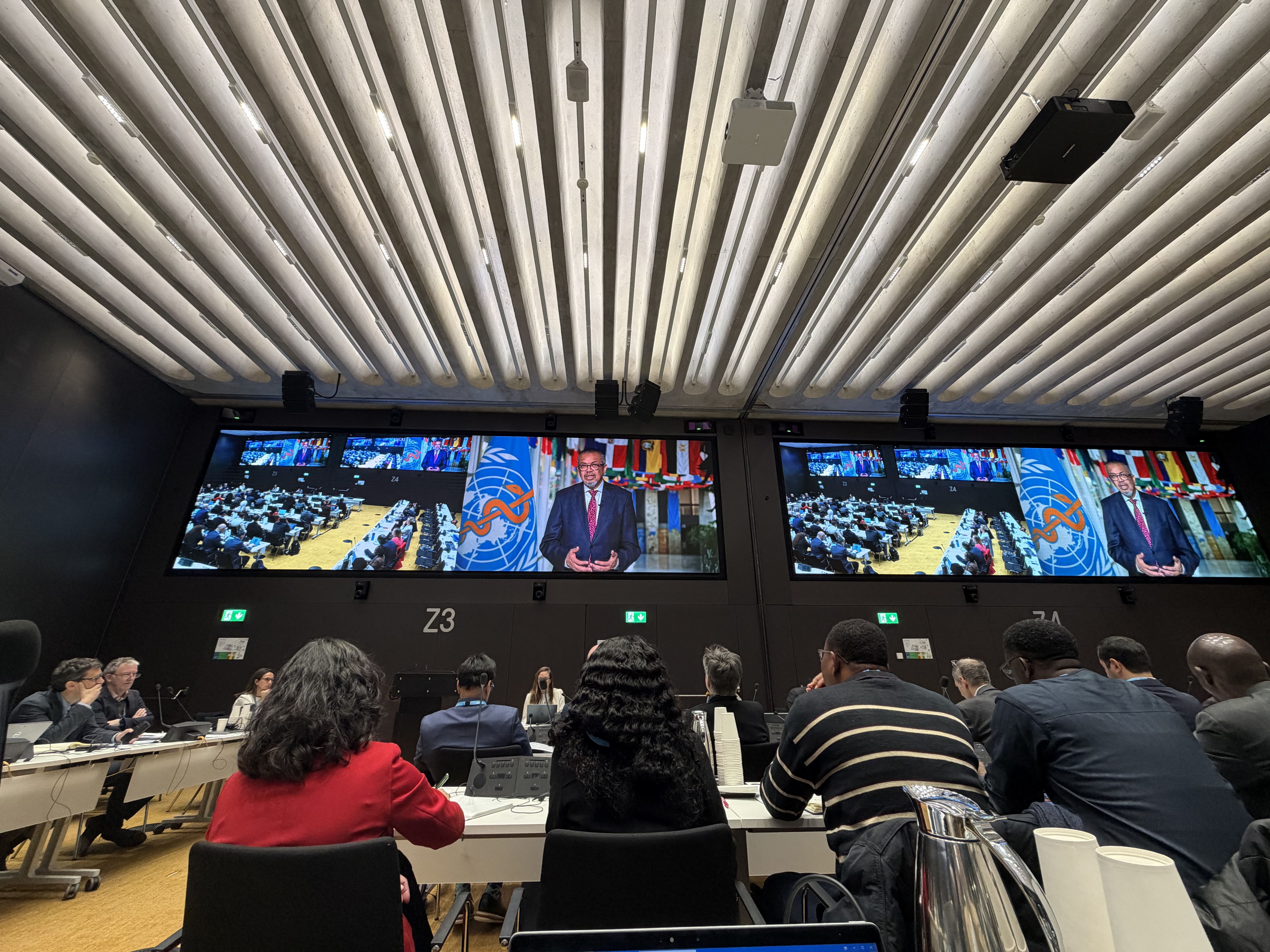
WHO Director-General, Dr Tedros Adhanom Ghebreyesus, on his opening speech during the7th Montreux Meeting on PFM and Health Financing,
1–3 December 2025. (Credit: WHO/Feby Oldfisra)
Indonesia’s participation in the 7th Meeting of the Montreux Collaborative on Fiscal Space, Public Financial Management and Health Financing, held at WHO Headquarters in Geneva from 1–5 December 2025, complemented this work. Indonesian delegates contributed to discussions on aligning PFM with primary health care financing, advancing provider autonomy, decentralization and strengthening accountability.
Reflecting on Indonesia’s experience, Prastuti Soewondo, senior advisor to the minister of health of Indonesia on health financing, highlighted the importance of BLUD status:
“BLUD status expands the decision space for puskesmas by allowing greater flexibility in planning and using resources based on local needs, while maintaining accountability through clear governance and oversight mechanisms. This balance between autonomy and accountability is critical for improving responsiveness and service quality at the primary care level.”
Strengthening PFM is essential to ensure that increased public spending on health translates into better and more equitable primary health care services. Addressing PFM bottlenecks and embedding reforms within broader health system transformation will help improve efficiency, facility-level responsiveness and support sustainable progress toward universal health coverage.
WHO will continue supporting Indonesia in translating policy insights into practice by strengthening analytical capacity, promoting cross-country learning and supporting the use of PFM evidence to inform health financing and primary care reforms at national and subnational levels.
Written by Feby Oldfisra, NPO Health Financing, WHO Indonesia